
by Krista | Nov 15, 2011 | Bootstrap Monday
As much as I love seeing gorgeous old buildings and ambling down narrow cobbled alleyways in Italian cities, one of my favorite ways to get to know a place is to go hiking.
When I visited my friend Maddalena in Italy this fall, she took me on a gorgeous hike just as the sun was setting over the russet hills outside Bologna. We entered the gates of the park in time to see locals gathered around a bright red tractor to pick up some last minute produce for their dinners.
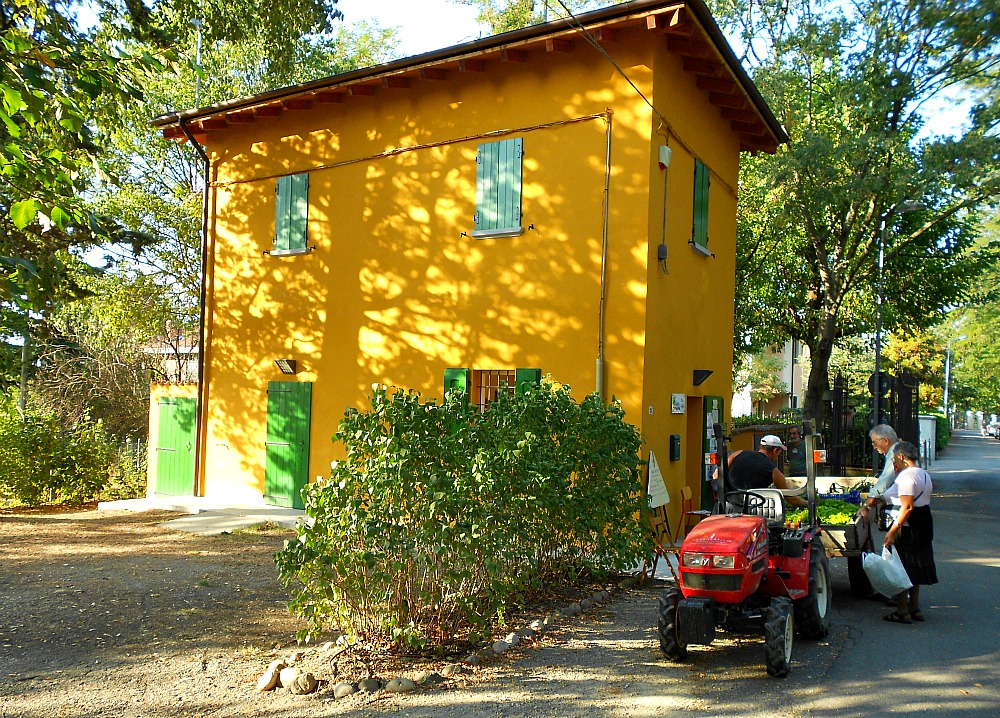
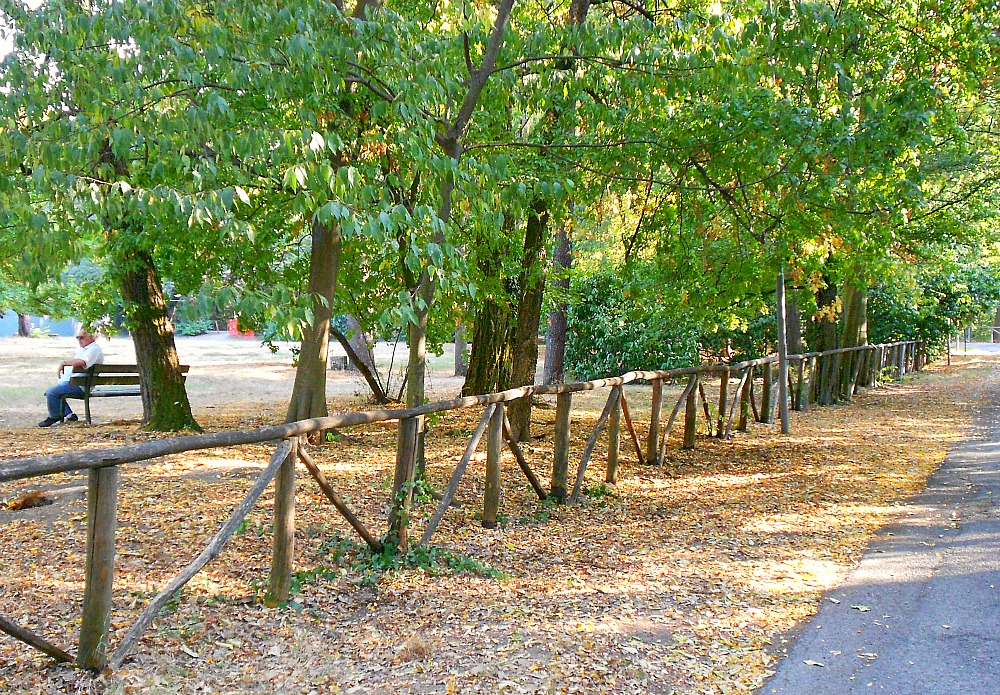
It was such a peaceful time of day to go for a walk. Mothers pushed prams and chattered happily with their friends, and old men parked themselves on benches to watch the goings on of their neighbors.
Our first stop was at the ruins of a once splendid villa rising golden and majestic in the late afternoon sun.
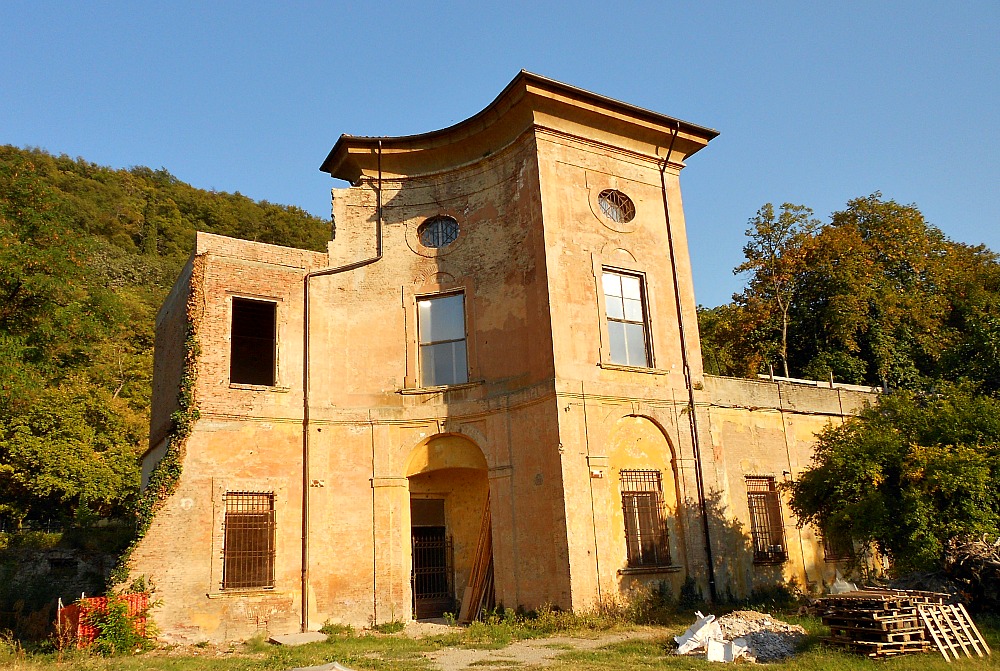
Once a stunning place of colonnades, soaring ceilings and a flourishing orangerie, the villa managed to survive all of World War II until it was bombed on the very last day of the war.
Maddalena and I were just discussing how we wished some rich personage would come along to restore it when she spotted a sign saying that restoration was actually beginning. Hooray!
Old black and white pictures showed us what the villa used to look like. Isn’t it beautiful and grand? Like something out of an old Hollywood movie. 🙂
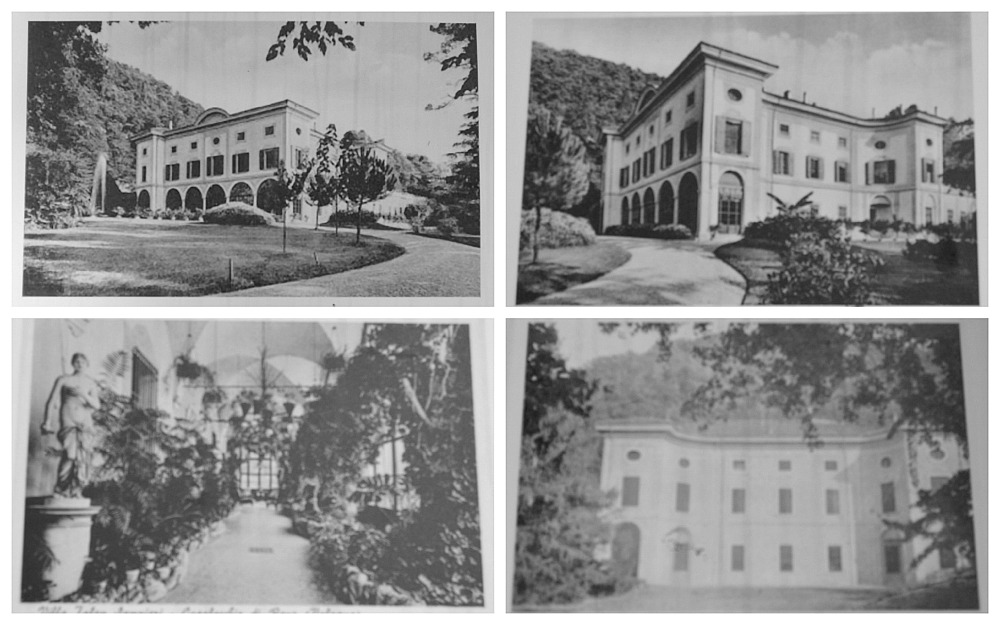
I can’t wait to visit in a few years to see the villa as it ought to be: tall, stately, with native Italian plants thriving once again.
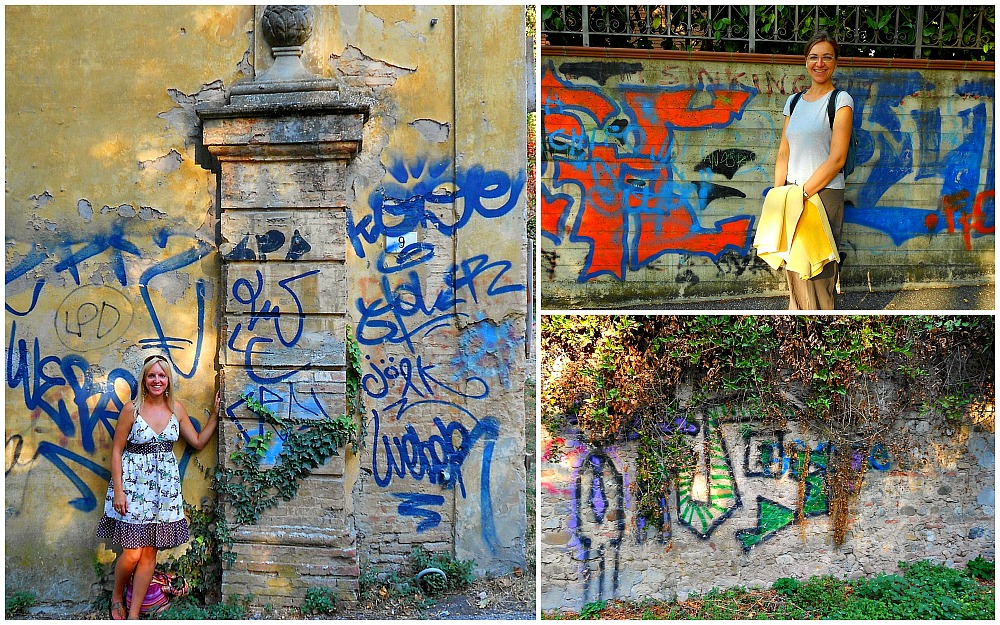
We continued on our way, Maddalena telling me what it was like in Italy during the war years. As in the rest of Europe, times were very difficult for the local population.
Unlike the rest of Europe, Italy had the dubious position of being a former ally of Germany. For several years the Nazi’s had lived peaceably in Italy, using the country as a base of operations, but overnight they went from being friends to enemies.
The results were horrifying for the Italians. Murder, starvation, and fear were daily struggles, and many lost their lives in the years that followed.
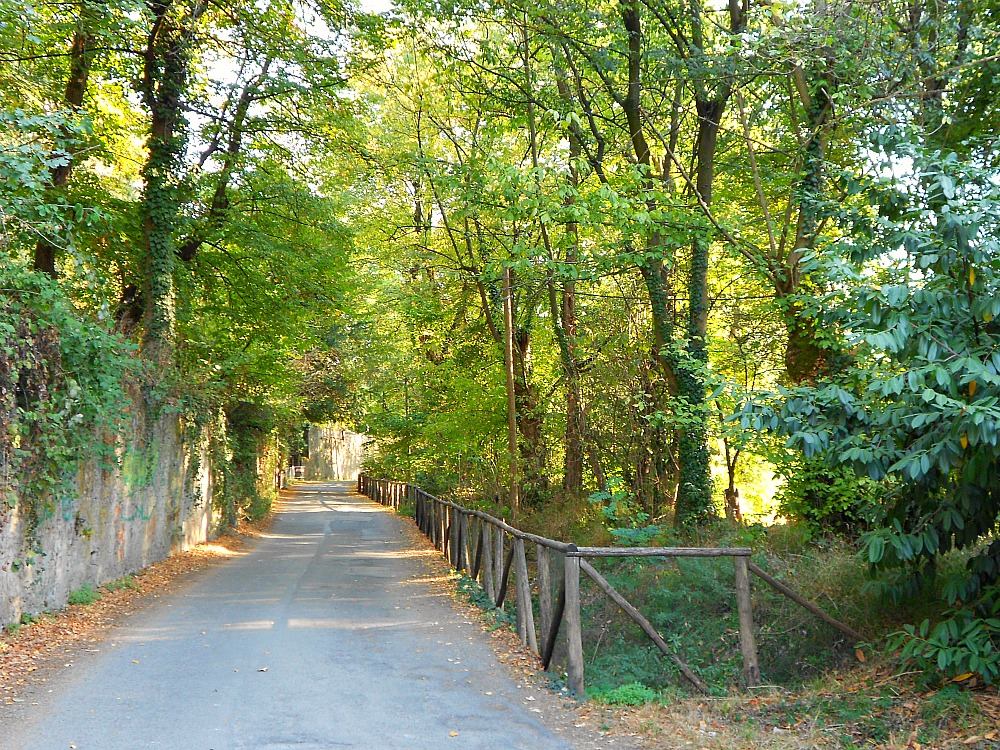
It was amazing to walk these paths, feeling completely safe and peaceful, knowing that just a few years ago Resistance fighters and Nazi’s fought a constant game of cat and mouse.

It feels so peaceful now.
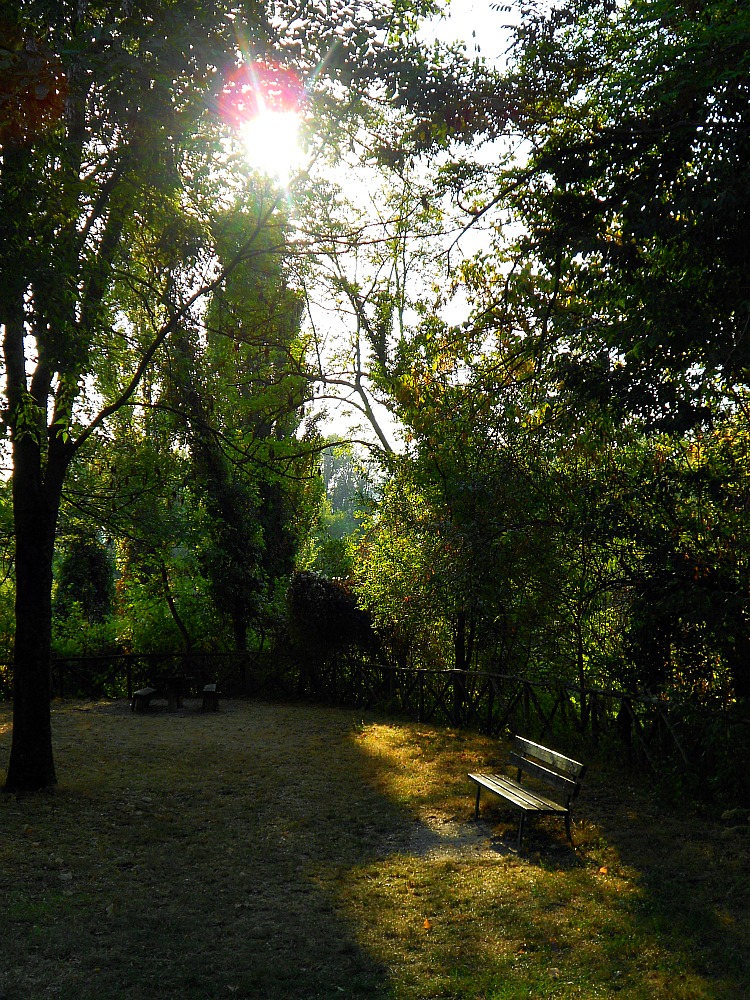
So warm, quiet, and safe.
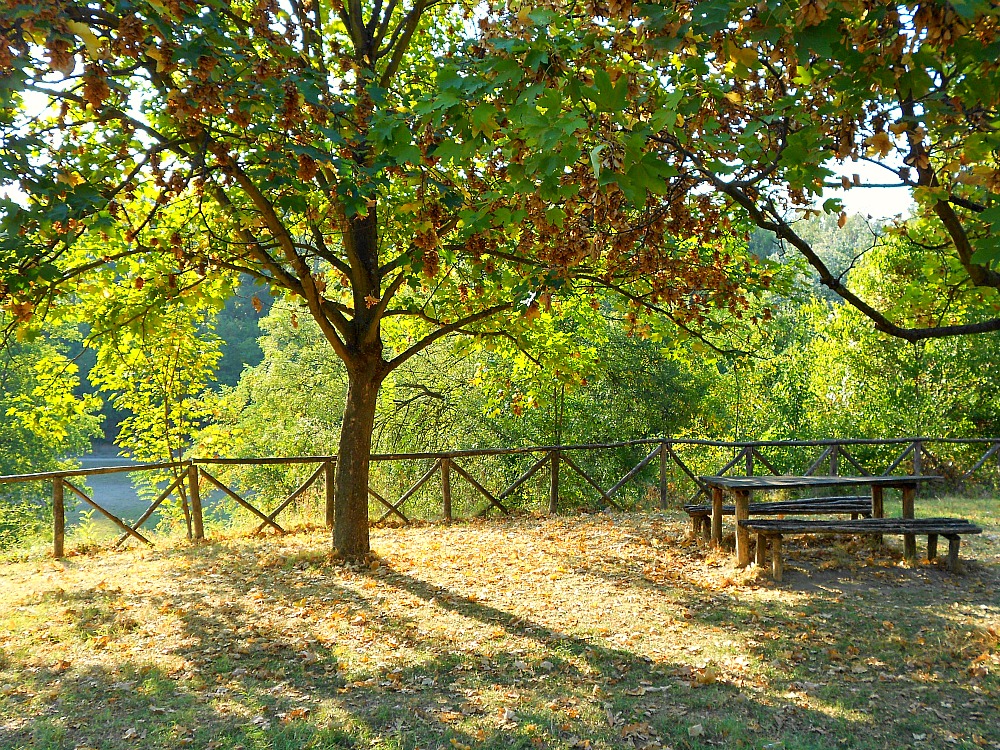
But there are still reminders of those days in the crumbling, bombed out villas scattered throughout the park.
I’m glad people are investing the time and money in restoring them, but I’m also glad I got to see them as they are. Vivid reminders of the preciousness of peace and freedom.
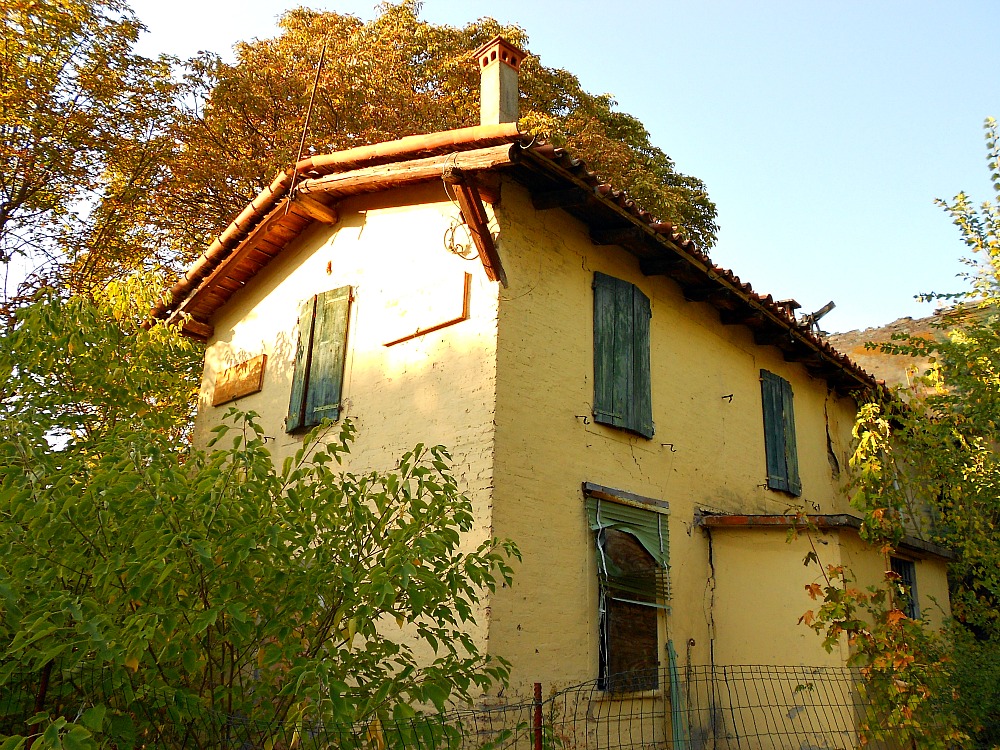
Soon our trail left the woods and wended up into the hills, heavenly sunshine warming us after the cool shade of the forest.
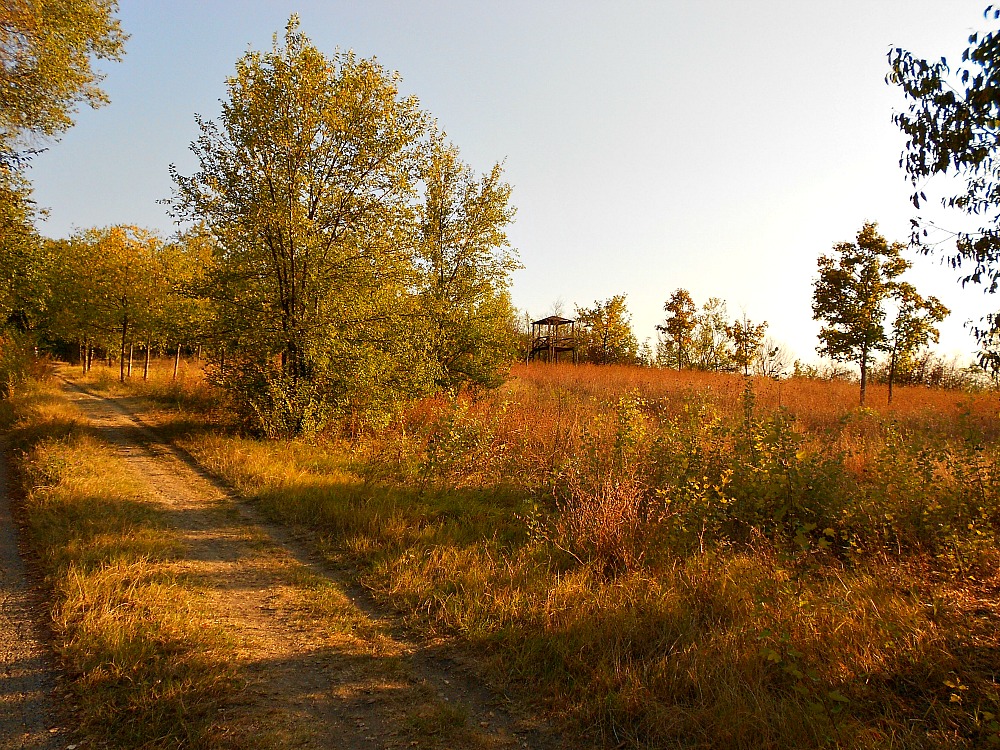
Tomorrow I’ll show you glorious views worth every step of our uphill trek.
What is a meaningful historical site you’ve visited?

by Krista | Nov 10, 2011 | Plucky Thursday
Good morning, luvs! After treating myself to homemade butterscotch pudding for breakfast, I’m getting all sorts of work done! Laundry, dishes, paying bills. Man, it feels good! 🙂
Last weekend bear and I drove out to visit our dear friends Shirley and Joe at their beautiful goat farm.
I love going out there, laughing at the antics of the baby goats as they wobble and leap on their spindly legs, gazing in awe at the oh-so-pregnant mamas waddle along with their enormous bellies.
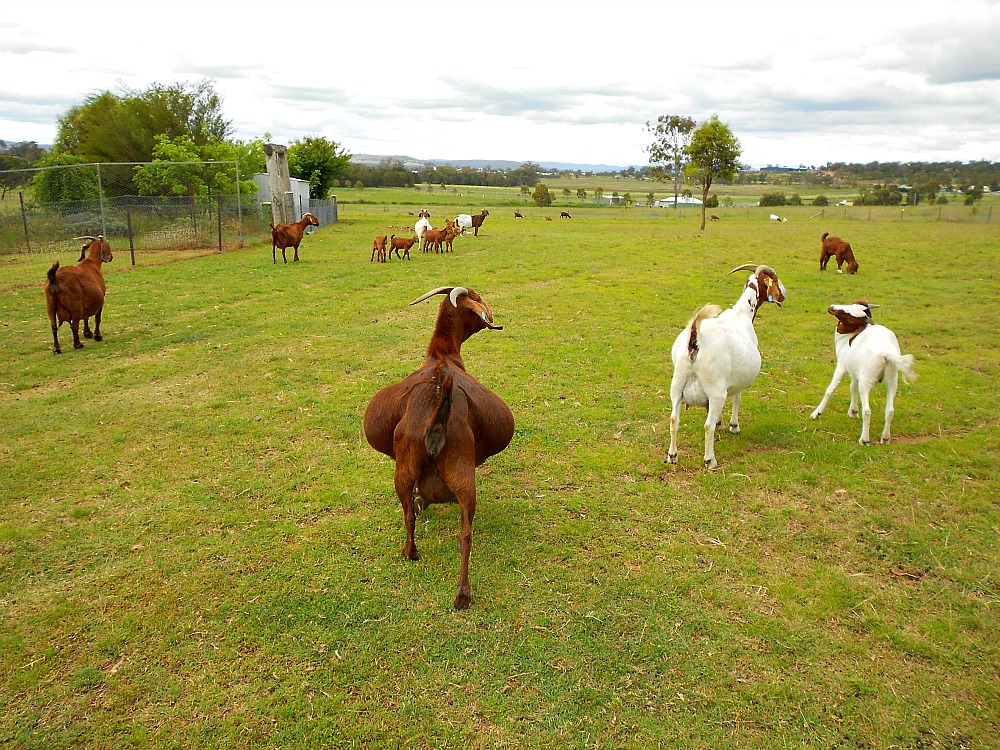
Big Mama comin' through!
We always go for long walks, wandering through the pastures and out along the creek bottom before ending back at the house for something delectable Shirley has made. This weekend was no exception. She served us up a splendid lunch of pasta with broccoli, toasted pine nuts, sundried tomatoes and Parmesan, buttery garlic bread, chilled wine, and a marvy cream cake topped with fresh mangoes and strawberries.

One day soon I’ll show you pictures of the wildflower-filled creek banks and darling baby goats, but today I want to linger awhile among Shirley’s flower beds.
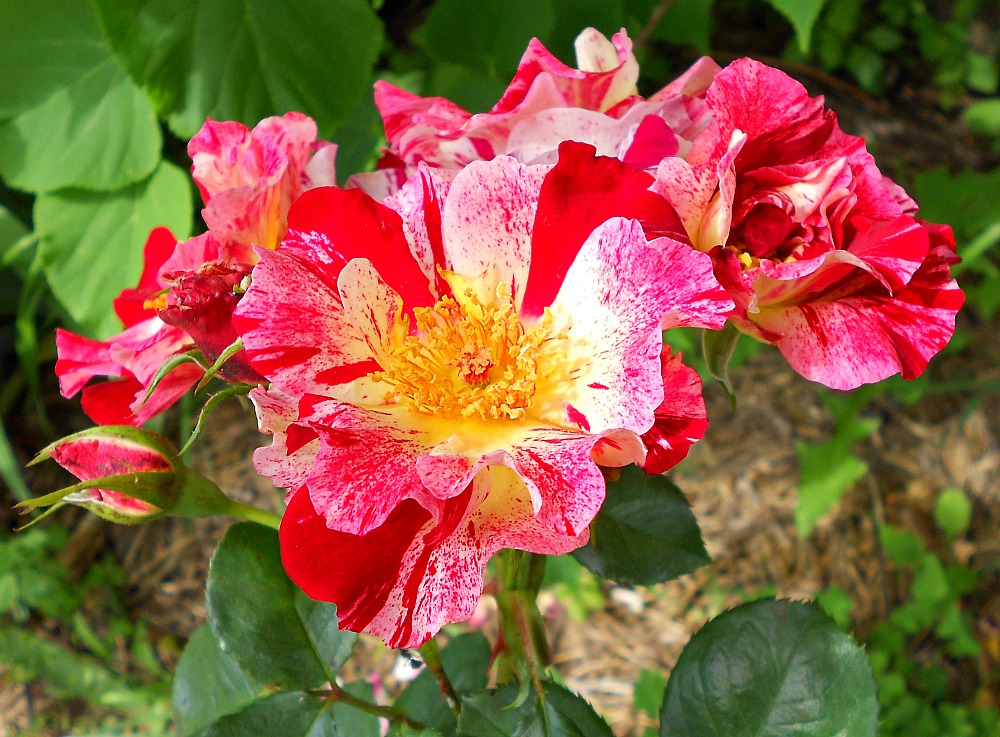
Fourth of July Rose
Whenever I visit, Shirley takes me on a tour of her many gardens, pointing out what’s blooming, explaining what would grow well at my place, and introducing me to Australian native plants I’ve never even heard of.
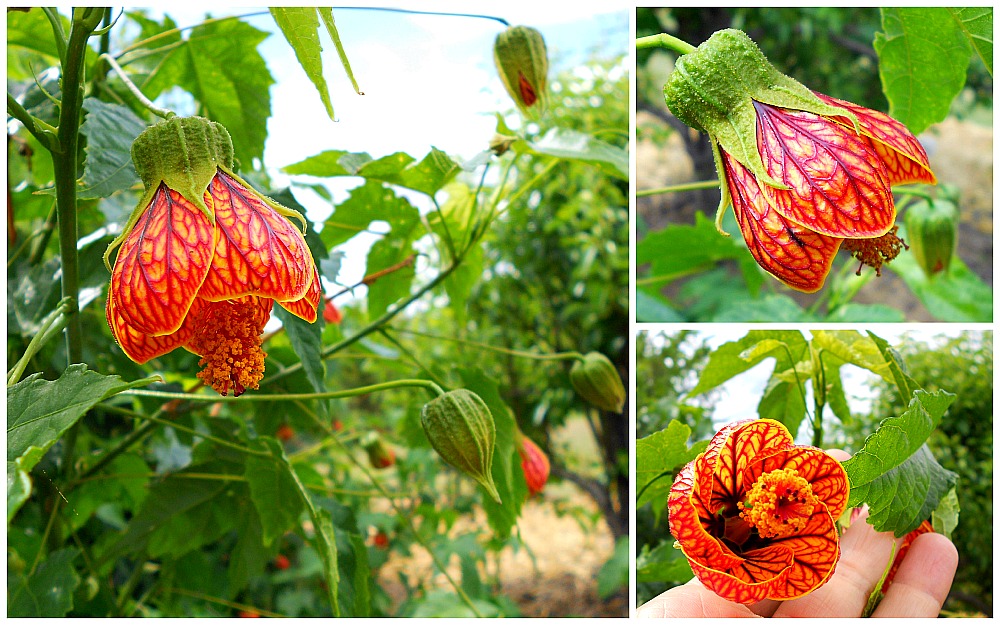
Her gardens are such a lovely hodgepodge of old and new flowers, hardy vegetables and gifts from friends overseas, all growing vigorously in this fabulous Queensland weather that seems to make everything flourish.
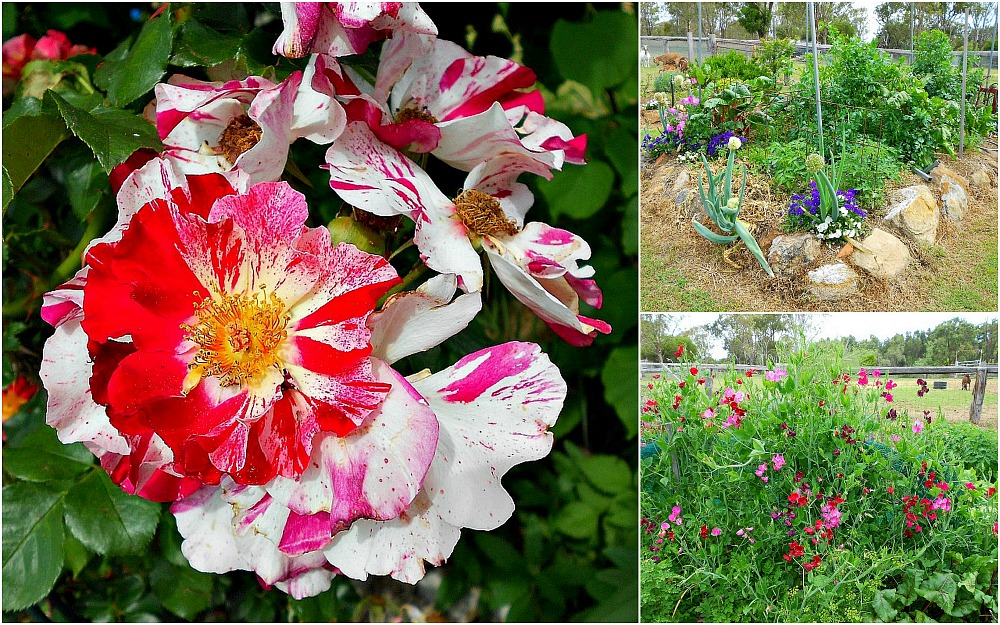
This week she sent me home with a gorgeous bouquet of spinach leaves and sweet pea blossoms, and a couple of gardening magazines to inspire me.
I am not a natural gardener like Shirley, Ann, my Mum, or my brother Ryan, but I’m learning as I go and get so excited as I see seeds become seedlings and then something I can actually eat or decorate with. Amazing. 🙂
Are you a gardener? Do you have a garden? What’s the one plant you MUST have?
Shirley’s Mango Cream Cake
Ingredients:
one sponge cake (lemon or vanilla)
1 small carton heavy whipping cream
sugar to taste
1 ripe mango, peeled and sliced into long strips
3-6 strawberries, halved
Directions:
- Bake sponge cake according to directions, cool and halve.
- Whip cream and sweeten to taste.
- Frost bottom layer of cake with half of cream.
- Place top layer on cream and frost with remaining cream.
- Decorate with mango and strawberries and serve immediately.
- (If making ahead of time, wait to add fruit until just before serving.)

by Krista | Nov 9, 2011 | Compatriot Wednesday
Cozy pashminas, sparkly rings, or perhaps a glossy postcard or two?
This month at Across the Cafe Table with the Travel Belles, we’re discussing What’s your favorite shopping find from your travels?
I confess I’m not a big collector when it comes to travel souvenirs. I do have a small, beloved assortment of treasures from various places, but mostly I like to commemorate my adventures with photographs and something I can wear or use.
I love the pashminas I found in Eastern Europe and still swoon at the wondrously gaudy rings I found in Greece and Germany, but my all time favorite shopping find is my dear, battered and much loved red Italian coffee pot.
I’ve been a huge fan of rich, strong Italian coffee since my very first cup. I finally learned how to make it while staying at this Italian country house outside Bologna with my dear friend Maddalena and her family.
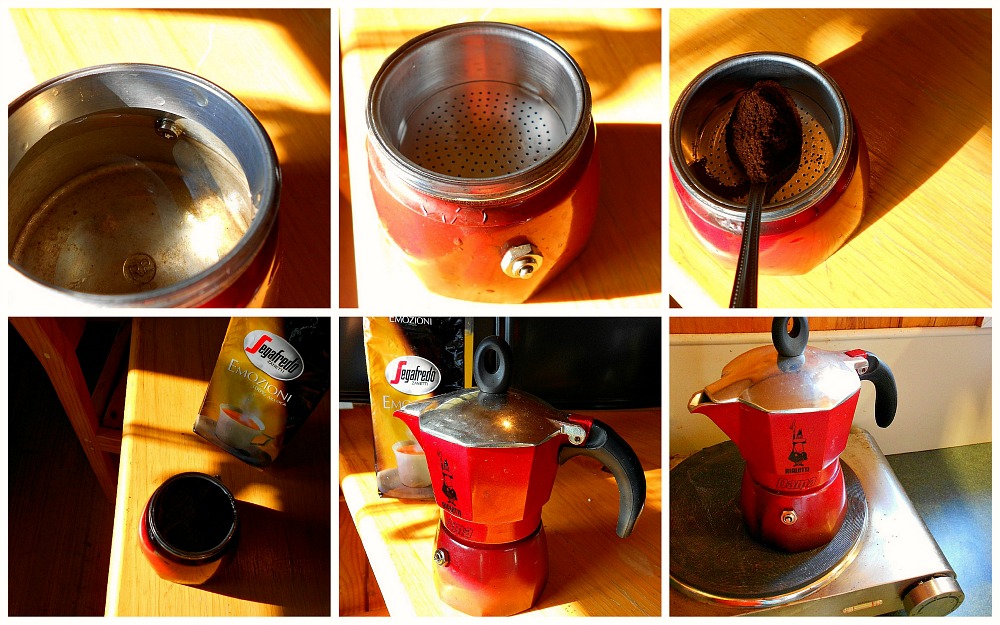
I was the early riser of the gang, so Maddalena taught me how to make my own perfect cup of Italian coffee. I would wake while it was still dark, wrap a pashmina around my shoulders and shuffle out to the kitchen. Easing the door closed so my clattering wouldn’t wake anyone, I’d fire up the gas stove and collect everything I needed. Following the steps below, I was soon sitting at the kitchen table with my cold hands wrapped around a steaming cup of Italian coffee.
How to make real Italian coffee:
- Fill the bottom of the pot with cool, fresh water, halfway up the little bolt you see on the inside.
- Place metal filter inside bottom of pot.
- Spoon in real Italian coffee grounds. (In Australia you can buy it here. In America you can buy it here.)
- Fill the filter with coffee and make it level.
- Screw on top of coffee pot.
- Set directly on stove-top burner. (I don’t have a real stove, so I use a hot plate and it works just dandy.)
- Coffee pot will make a racket while it is percolating, and you’ll know it’s done when the noise stops.
- Remove pot from burner, pour directly into cups and serve.
My friend Maddalena only adds a bit of hot water to her coffee to make it perfect, but she said most of her friends and family add milk to weaken the hearty brew.
My perfect cup is hot coffee, a healthy dose of fresh whole milk and the merest hint of raw sugar.
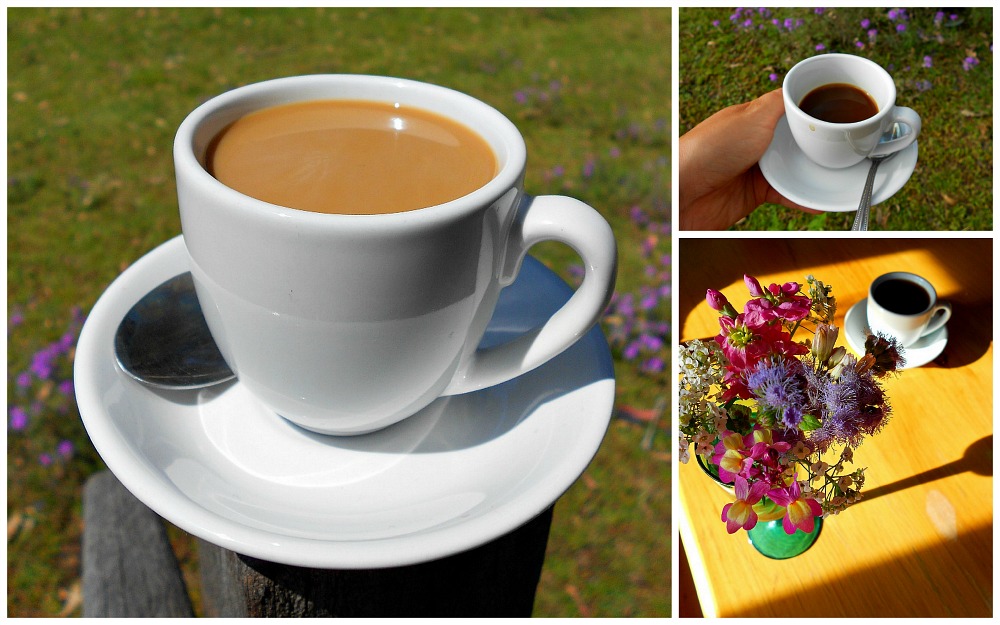
My little red Italian coffee pot makes me smile every morning, and brings back wonderful memories of sunny mornings in Italy talking for hours with dear friends.
What is YOUR favorite travel shopping find?
Click here for more travel shopping inspiration.

by Krista | Nov 6, 2011 | Bootstrap Monday
Good morning, luvs! How was your weekend?
After feeling pretty blech with a cold/flu/achy something last week, I perked up on the weekend and had such a good couple of days.
Saturday I got to visit my friends Shirley and Joe at their gorgeous goat farm. I can’t wait to show you pictures of their wildflower-filled creek banks and darling baby goats a bit later this week.You won’t believe the enormous belly on one of the pregnant mama goats!
Yesterday afternoon my friends Ann, Neil, Lizzy and Jess joined bear and me at the farm, and we had a jolly work party getting all sorts of things done.
We built new pens and roosts for the chooks (Aussie word for chickens) and shifted the feathered folk around. They are so happy to be out of their small cages and dashing about in their expansive new digs.
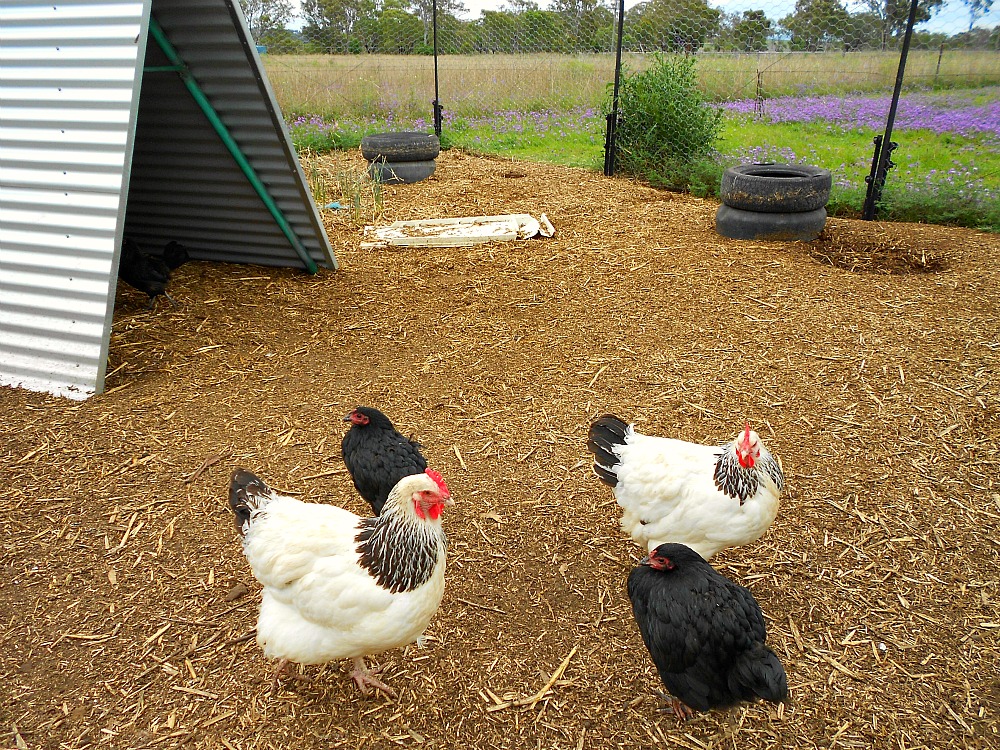
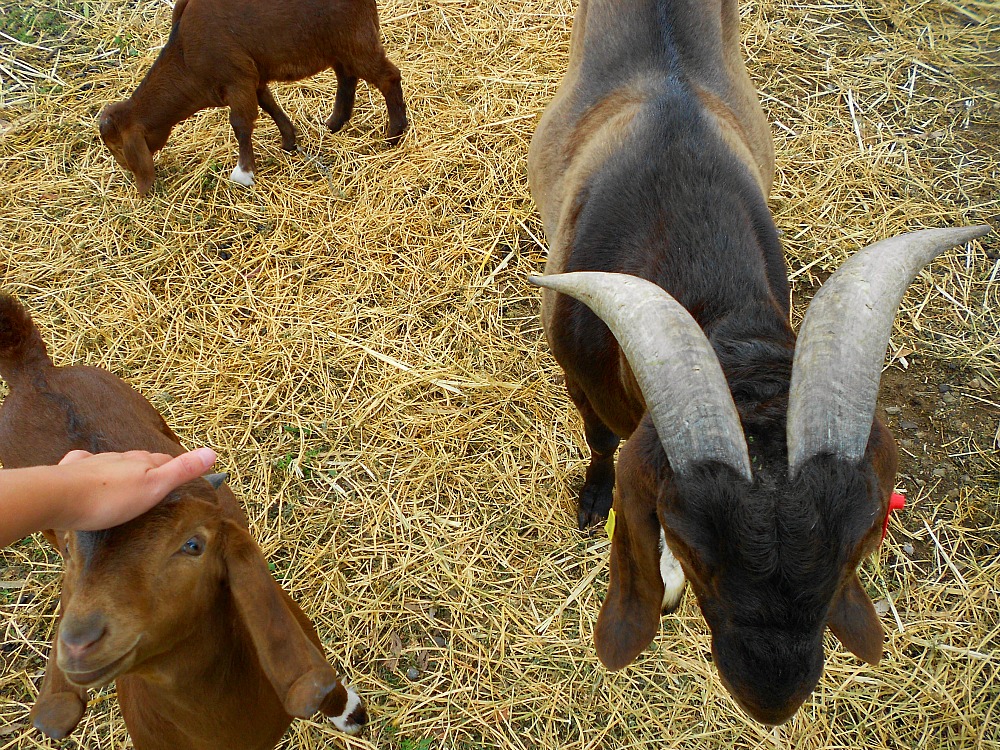
We let the goats out of their pen and gave them free reign of the yards. Tentative at first, they’re now roaming happily as if they owned the joint. Below are William (the Dad) and Felix and Sophie (the two month old twins). They love coming up to get their heads scratched.
Although it’s spring here in Queensland, the weather was quite cool this weekend and put me in the mood for autumnal dishes.
After my grand cheese-making experience last week, I had fresh ricotta on hand that needed something special to go with it. I pondered for a few days and finally settled on roasted pears. With hot ginger caramel sauce. And toasted walnuts.
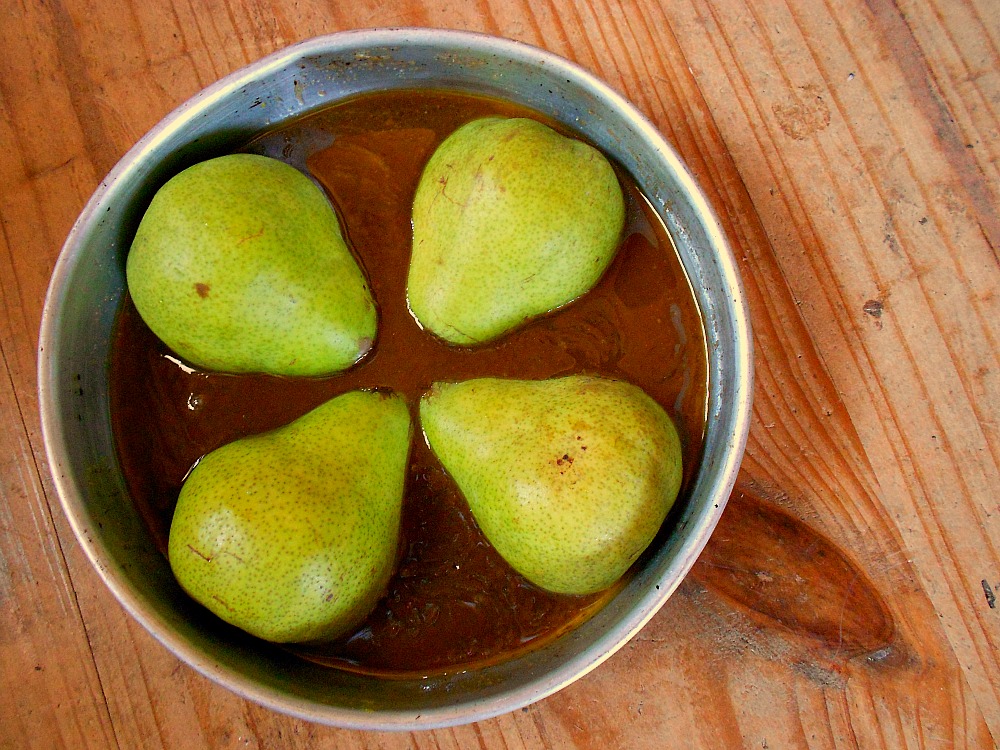
I love recipes like this. Decadent ones that are so very, very simple to make. This one is especially lovely because the sauce makes itself! Simply combine melted butter with brown sugar and powdered ginger in the bottom of a cake tin. Top with halved and cored pears and roast them at 400 degrees F for 30 minutes. Turn the pears, spoon over some of the sauce and roast for 10-15 minutes more. Then place the pears on a plate, top with a dollop of fresh ricotta, drizzle with the remaining sauce and sprinkle on toasted walnuts. Delicious! I had some for second breakfast this morning and can’t wait to have the rest for dinner tonight.
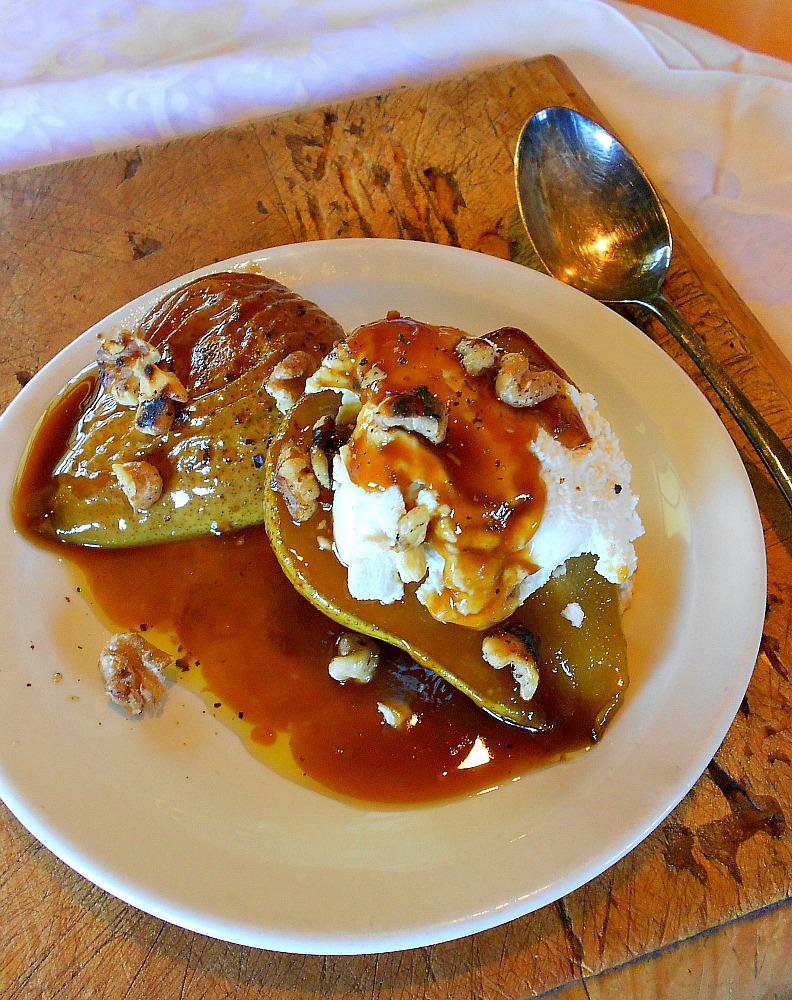
Ginger Caramel Roasted Pears
Below you’ll find my friend Ann’s recipe for ricotta cheese. It is so creamy, delicious and easy to make, you may never go back to store-bought ricotta again.
What is your favorite dessert on a cool, cloudy day?
Ginger Caramel Roasted Pears
(Serves two hungry people or four recently fed ones)
Ingredients:
2 Bartlett pears, halved and cored
3 Tbsp melted butter
1/2 cup dark brown sugar
1 tsp powdered ginger
1/2 cup fresh ricotta cheese
2-3 Tbsp chopped toasted nuts
Directions:
- Preheat oven to 400 degrees F.
- In round metal cake tin pour melted butter. Stir in brown sugar and powdered ginger until combined into smooth syrup.
- Place pears cut side down over sauce.
- Roast in oven for 30 minutes.
- Remove pan from oven, turn pears, baste with sauce and return to oven for another 10-15 minutes.
- Place each pear cut side up on plate, top with dollop of fresh ricotta, drizzle with remaining sauce and sprinkle with chopped, toasted nuts.
Ricotta Cheese Recipe
(from Ann Hill)
Ingredients:
5 litres (1.3 gallons) whey
2 cups whole milk
Salt to taste
Approximately 40 mls white vinegar
Directions:
- Heat whey to 60 degrees C (140 F) Stir frequently.
- Add whole milk.
- Add 1/2 -1 tsp of salt if you like.
- Continue to heat the milky whey to 90C-(194F) Continue to stir.
- At 90 C (194 F) add approximately 40 mls of white vinegar. At the first sign of small specks appearing in the whey, stop adding vinegar.
- Let stand on low heat for 5-10 mins to let the ricotta firm up, then, gently scoop off the layer of curd that has risen to the surface into a ricotta mould (or use butter muslin in a colander).
- Eat straight away or store in the fridge and use with in a week.

by Krista | Nov 3, 2011 | Fabulous Friday
Hi luvs! It’s a cloudy day in Australia, perfect for staying indoors with a mug of coffee and a few homemade cookies to keep me going.
Thank you so much for the love and support you showered on me yesterday. It meant the world to me and I wish I could hug you so tight as we celebrate hope, life and love. xo
Last weekend I had dear friends come over to teach me something I’ve been wanting to learn for ages: how to make cheese.
My friend Ann is an absolute wonder. She not only runs a farm with her hubby Neil, so also mothers five awesome kids, teaches part-time and manages the local health food store. She gives the best hugs and is an absolute wealth of information for all things related to gardening, cooking, and taking care of animals.
Ann, Jess, Lizzy and I had the best time crowded into my little kitchen as they instructed me in how to turn raw milk into ricotta, white cheese, and halloumi.

They taught me when to use rennet and when cultures would be best, how to cut and care for cheesecloth, and how to tell when cheese is ready to drain.
I think the greatest surprise in the whole process was how simple it was. One moment we had a pail full of frothy whole milk and within a few hours we had glistening white cheeses in various forms ready to eat. It was such a thrill to see those wobbly chunks of cheese and an even greater one to bite into them and find them far and away tastier than any store-bought counterpart I’ve ever tasted.
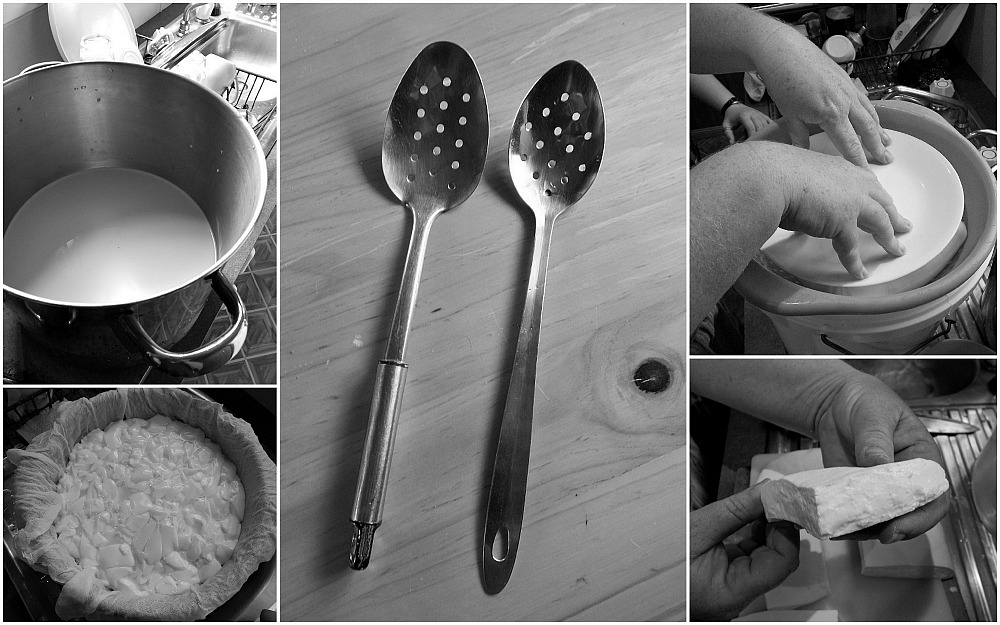
The white cheese is slightly tart – perfect for pairing with tomatoes or spreading on sandwiches.
The ricotta is divinely cream, and I’m waiting to find some peaches, figs or pears to roast to go with it.
Last night I followed Ann’s advice and coated the halloumi with sesame seeds then fried it until the seeds were a lovely golden brown. Oh. My. Goodness. It was so delicious I had to have it again for lunch today.
Halloumi is an interesting cheese in that it doesn’t melt when fried. It retains its shape and has a splendid squeaky texture that feels oh-so-toothsome when you bite it. And it goes perfectly with a nice, cold Australian beer like Hahn’s.
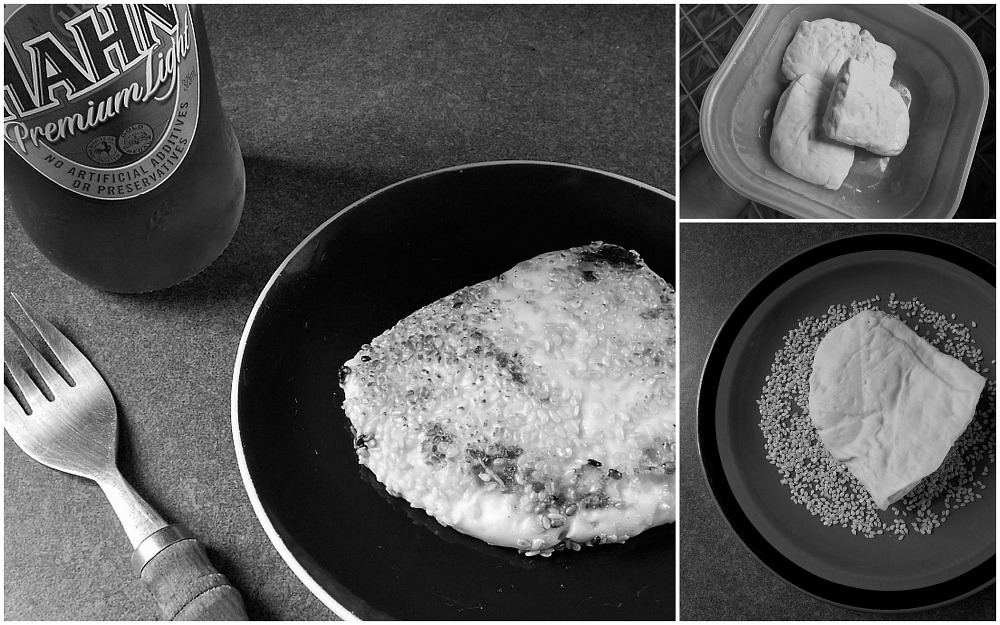
Now that I know how to make halloumi, I can’t wait to try even more recipes. Joumana from A Taste of Beirut and Bethany from Dirty Kitchen Secrets both have fantastic Lebanese recipes that use this marvelous cheese.
Have you ever made cheese before?
Sesame-Crusted Halloumi
Ingredients:
4 1/2″ thick slices of halloumi
3-4 Tbsp sesame seeds
drizzle of sesame oil
salt to taste
Directions:
- Dump sesame seeds onto small plate and press each side of halloumi into seeds to coat. NOTE: use a spatula to press the cheese down or all the seeds will stick to your hands.
- Heat oil in frying pan.
- Place halloumi slices in frying pan and fry 1-2 minutes on each side or until the seeds are toasted a nice golden brown.
- Serve immediately.
Halloumi Cheese Recipe
(from Ann Hill)
Ingredients:
8 litres/2 gallons of milk (fresh cows/goat/sheep milk if possible)
If you use homogenised milk you will need to use Calcium Chloride.
Rennet (amount needed depends on your brand)
2 to 50 mls Cooled boiled water
Directions:
- Heat milk to 30 degrees C/86 degrees F. Add Calcium Chloride if using.
- Add Rennet (amount depends on your brand) to the cooled water. The amount of water varies, depending on the recipe. I use about 5mls. Now add the rennet mixture to the milk. Stir for 2 mins, in an up and down motion.
- Let sit for 45 mins. I sit my pot with lid on, in the sink and fill the sink with water that is at 30 degrees.
- Cut the curd in half inch/12 mm cuts – slice the curd with the knife straight up and down from one side of the pot to the other, turn the pot 90 degrees and cut again – making a grid. Cut along the previous cuts with the knife at a 45 degree angle. Let the curds rest for 10 mins. Put the curds into a cheese cloth, keep the whey. I dip my cloth in boiling water and wring out, place into a large colander over a clean pot.
- Press the curds at 14 kgs/31pounds for 1 hour. If you don’t have a press simply wrap the curds with the cheese cloth and either place a saucer over the curds and balance a heavy weight or place the curd parcel on a clean cutting board place another board on top and balance a weight on, do this on the sink so the whey drains away.
- Re-wrap and press at 23 kgs/51pounds for 30 mins. Don’t get too worried about the weights and times, if your curds are firm you will be right.
- Remove and cut into 3 inch/7.5cm blocks or pieces.
- Bring reserved whey to 82-93 degrees C/180-199.5 degrees F and add cheese blocks. Simmer for half an hour or until the blocks rise up.
- Let cool for 20 mins and sprinkle with salt. You should use Kosher or cheese salt. Cool for another 2-4 hours.
- Halloumi cam be eaten fresh or stored in brine for 60 days.


_logo.svg)
